People Create Value. AI Simplifies Routine Work. HR Helps Them Evolve Together.
Business Performance Is Built Through Collaboration Between People and Technology
Artificial intelligence is reshaping how companies organize their operations, manage information, and allocate resources, creating tangible opportunities for greater efficiency and growth. In this context, competitive advantage does not come from adopting the latest tools, but from the ability to integrate them where they deliver measurable results while keeping people’s skills and potential at the center of business decisions.
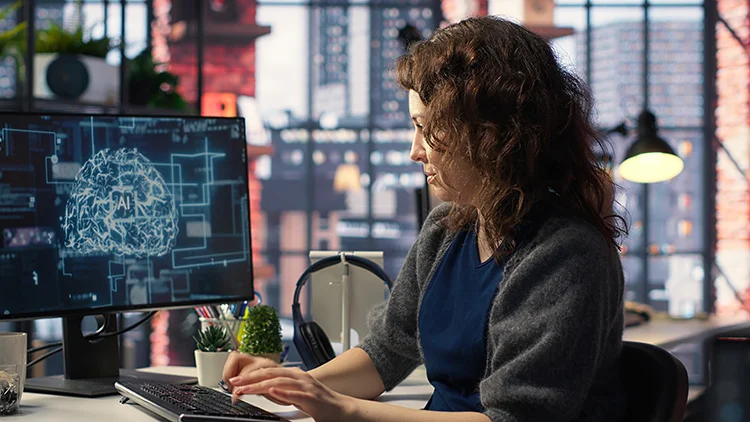
“Real impact emerges when artificial intelligence is combined with the experience, judgment, and empathy that human intelligence brings.” Source: SHRM (Society for Human Resource Management).
AI Simplifies Routine Work and Supports Operational Efficiency
Information processing, drafting standard documents, organizing data, and preparing reports are just some of the activities that can be simplified with artificial intelligence. Automating these processes appropriately can reduce the time spent on repetitive tasks and improve workflows, giving companies greater flexibility in how they use their resources.
The benefits become meaningful when the time saved is redirected toward higher-value activities, such as customer relationships, opportunity analysis, service development, and decision-making. Rather than spending a significant part of their working hours on standardized operations, employees can make better use of their professional experience and skills.
However, AI adoption should begin with clear objectives and an assessment of existing processes, rather than pressure to use technology for its own sake. Choosing the right tools, protecting information, and verifying results are essential conditions for turning operational efficiency into tangible business benefits.
HR as a Mediator Between People and Artificial Intelligence
Integrating AI changes responsibilities, workflows, and professional requirements, making an approach that considers both company objectives and the impact of change on employees increasingly important. HR can facilitate this transition by identifying relevant skills, supporting managers, and preparing employees for a way of working in which technology complements human contribution.
This role involves more than communicating organizational change. It requires assessing which activities can be automated, identifying responsibilities that still require human judgment, and anticipating professional development needs. Through dialogue and training, HR can help reduce uncertainty and create an environment in which people understand the purpose of technology and how it can support their work.
At the same time, efficiency must not come at the expense of responsibility. In processes that influence recruitment, performance evaluation, or employee development, transparency, confidentiality, and human oversight remain important. HR can help establish responsible practices so that decisions affecting people take context, fairness, and consequences into account.
HR as a Learning Partner for Entrepreneurs
For entrepreneurs, the challenge is not to master every AI tool available, but to understand where it can be used effectively, what its limitations are, and what results it can deliver in the context of their own business. An informed decision begins with assessing business needs, continues with identifying suitable solutions, and involves evaluating their benefits against the time, costs, and risks involved.
HR can support this process through information, training, and the development of skills needed to adapt to new working conditions. Through learning sessions and dialogue with managers, entrepreneurs can gain practical guidance on identifying automation opportunities, preparing their teams, and managing the changes that come with introducing new technology.
This perspective makes learning an integral part of business strategy. Instead of adopting solutions simply because they are popular, companies can learn to define clear objectives, test relevant applications, and monitor results. Technology then becomes a management decision grounded in real business needs, while employee development remains an integral part of the process.
Competitiveness Is Built Through Complementarity
Artificial intelligence can accelerate processes and simplify tasks, but performance depends on how these capabilities are integrated into an organization’s operations. Experience, judgment, creativity, and the ability to understand people and the business context remain essential to sound decisions and strong professional relationships.
In this context, HR can connect three important dimensions of business development: people’s skills, the opportunities offered by technology, and entrepreneurial objectives. Through recruitment, professional development, support for organizational adaptation, and education, HR helps prepare companies for change and contributes to making more effective use of available resources.
Competitive advantage does not come from automating every activity or preserving existing ways of working unchanged, but from knowing where technology can improve efficiency and where human contribution makes the difference. Companies that treat this complementarity as a strategic priority create stronger foundations for adaptation, innovation, and sustainable growth.

Financial freedom begins with thoughtful choices, not bigger purchases.
Website: shop-my-way.com
Archive: Olivia